


May 29, 2026
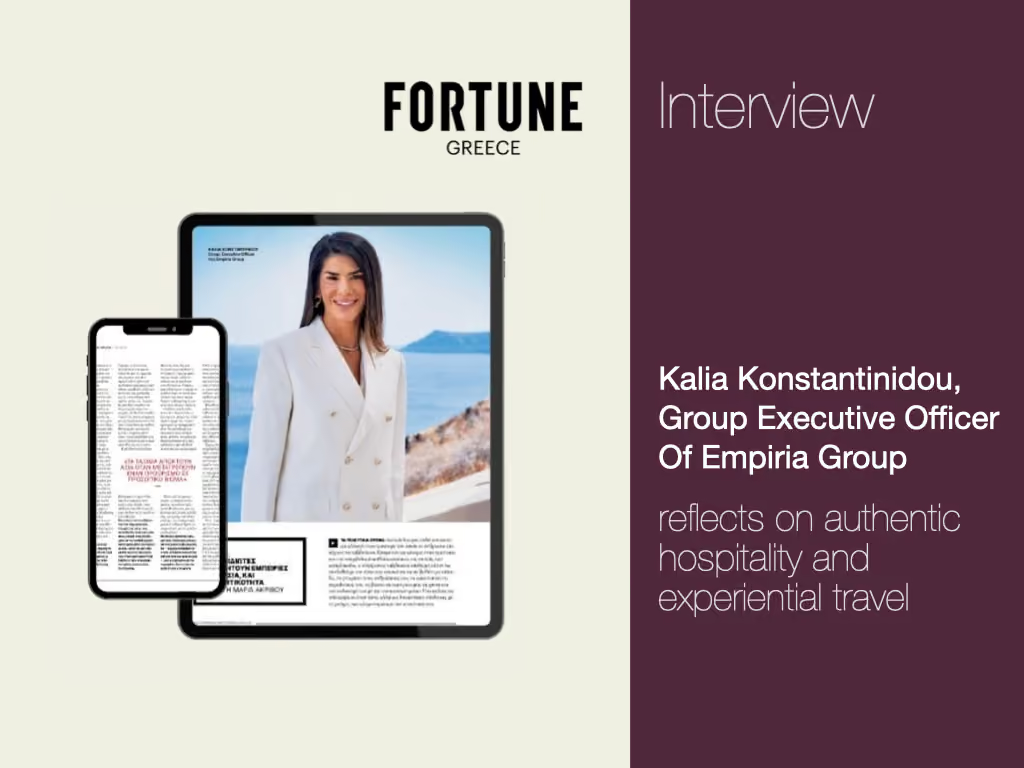
An interview with Kalia Konstantinidou, Group Executive Officer of Empiria Group, speaking to Fortune Greece
How is an authentic connection between the visitor and the destination translated into practice? Which elements of everyday life, local people and culture do you believe act as the strongest carriers of identity for a destination?
An authentic connection with a place is not created through a superficial or staged experience, but through the ability of the visitor to feel, even momentarily, part of the natural and human rhythm of the destination. At Empiria Group, this means creating experiences that allow for genuine interaction with the everyday life, traditions, flavors and people of each place.
I believe the strongest carriers of identity will always be the people themselves, the way they speak about their land, cultivate it, preserve a craft, or welcome someone to their table. Authenticity lives in the details: in an old canava winery in Santorini that carries its own story, in a family winery where winemaking knowledge is passed from generation to generation, in a recipe that allows you to taste tradition and memory, or in the slow rhythm of a Cycladic afternoon as the golden sun gives way to the silver moon.
These are the moments that transform a destination from an image into a lived experience.
Gastronomy, agricultural production, local craftsmanship and natural beauty are not complementary elements, but essential expressions of a destination’s identity. When local producers and creators are meaningfully integrated into the guest experience, and when nature becomes inseparable from it, then the experience gains authenticity and coherence. The visitor no longer simply consumes a service, but truly connects with a place. And that is where hospitality evolves from function into cultural experience.
Experiential tourism is often described as a trend, while you approach it as a transformative tool. How can an experience change not only the image of a destination, but also the way a traveler feels they belong within it?
Experiential tourism, as we perceive it, is not about the consumption of experiences, but about creating an emotional connection with a place. When travelers engage meaningfully in an experience, whether through gastronomy, interaction with a local creator, or immersion in the natural landscape, the destination ceases to be merely a point on a map and begins to hold personal meaning.
That is where the feeling of belonging begins. Through small but deeply human moments, visitors no longer feel like outsiders or temporary guests, but part of a living story unfolding around them. I believe this emotional shift is what ultimately transforms not only the image of a destination, but also the very way we travel.
What are the turning points that show today’s traveler is no longer satisfied with simply seeing a destination, but wants to feel, participate and connect?
In recent years, we have witnessed a very meaningful shift in the way people choose to travel. There is a clear transition from the pursuit of image-driven travel to the search for emotion and experiences with genuine meaning.
Today’s traveler seeks a deeper connection with the destination they visit. They want to meet its people, understand its traditions, and experience its gastronomy, nature and culture in a more meaningful way. Travel is no longer perceived simply as visiting a place, but as an opportunity to connect with its memory, heritage and identity.
When an experience stems from authentic local narratives, it gains both depth and longevity. And at that point, tourism ceases to be transactional and becomes something transformative.
Perhaps this is also a natural reaction to the speed and excessive aestheticization of the social media era. Today, true luxury for many people lies in authenticity, in the ability to pause and be present, and in the feeling of genuine human connection.
Local communities are often the invisible protagonists behind a meaningful experience. How do you collaborate with local communities to ensure experiences remain authentic rather than staged for visitors?
Authenticity cannot be manufactured. It can only be protected and highlighted with respect. That is why our relationship with local communities is based on collaboration, trust and mutual value creation.
When local people, especially younger generations, actively participate, tourism becomes a tool for continuity, identity and cultural preservation. Education plays a critical role in this process, shaping the future custodians of each destination. Ultimately, experiences gain value when local residents are not simply service providers, but carriers of knowledge and storytelling.
We collaborate with people who genuinely express their place, from producers and winemakers to artisans, artists and cultural organizations, without altering the natural essence or character of the experience for the sake of tourism. What interests us is not the “performance” of locality, but a genuine encounter with it.
At the same time, through collaborations with organizations such as Marketing Greece, the Cyclades Preservation Fund and Cycladic Identity, we actively invest in preserving the natural and cultural footprint of the Cyclades.
How do you define luxury hospitality today, at a time when luxury is increasingly associated with emotion, storytelling and human connection?
Today, the meaning of luxury has shifted from the visible to the essential. It is no longer defined solely by aesthetic perfection or material excess, but by the quality of the experience and the feeling it leaves behind.
Luxury hospitality means creating space for calmness, connection and authenticity. It means offering an experience that allows guests to feel truly present, closer to nature, to the destination, to the people they love and ultimately to themselves.
True luxury lies in care, detail, time, silence and the feeling that every element has been created with intention and respect.
Do you believe today’s traveler is ready to make more conscious choices? And how can hotels guide guests toward experiences with substance, rather than the “fast and superficial” culture often shaped by social media?
I believe more and more travelers today are searching for experiences rooted in meaning, authenticity and greater consciousness. There is a growing desire to travel more slowly, more meaningfully and with greater respect for the destinations we visit.
The role of a hotel is not simply to provide services, but to act as a curator of experiences with real value. To guide guests toward people, flavors, stories and activities that reveal the true identity of a destination.
Through gastronomy, local collaborations, cultural initiatives and a more sustainable philosophy of hospitality, we can encourage a different model of travel, one that is less superficial and more experiential.
In what ways can experiential tourism strengthen sustainability, not only environmentally, but also socially, culturally and economically, so that destinations remain authentic and alive over time?
Experiential tourism has the ability to create a more balanced and meaningful relationship between the visitor and the destination. When an experience is rooted in local people, traditions, knowledge and the natural identity of a place, it strengthens not only the local economy, but also the cultural and social sustainability of the destination itself.
At the same time, it cultivates a different kind of awareness within the traveler. Visitors begin to perceive a destination not as a product for consumption, but as a living ecosystem that deserves respect and protection.
However, sustainable tourism cannot exist without the meaningful participation of local communities. Tourism must be co-created with the destination, rather than imposed upon it. Because ultimately, sustainability is not only about the environment. It is about preserving the soul of a place, its authenticity, memory, people and way of life so that it can continue to evolve without losing its character over time.
At Empiria Group, this philosophy is encapsulated in what we call “Space for Joy.” A hospitality framework that creates value not only for the guest, but also for the destination itself. Because in the end, success will not be defined only by how the visitor leaves, but by what remains behind for the destination.



