November 12, 2026
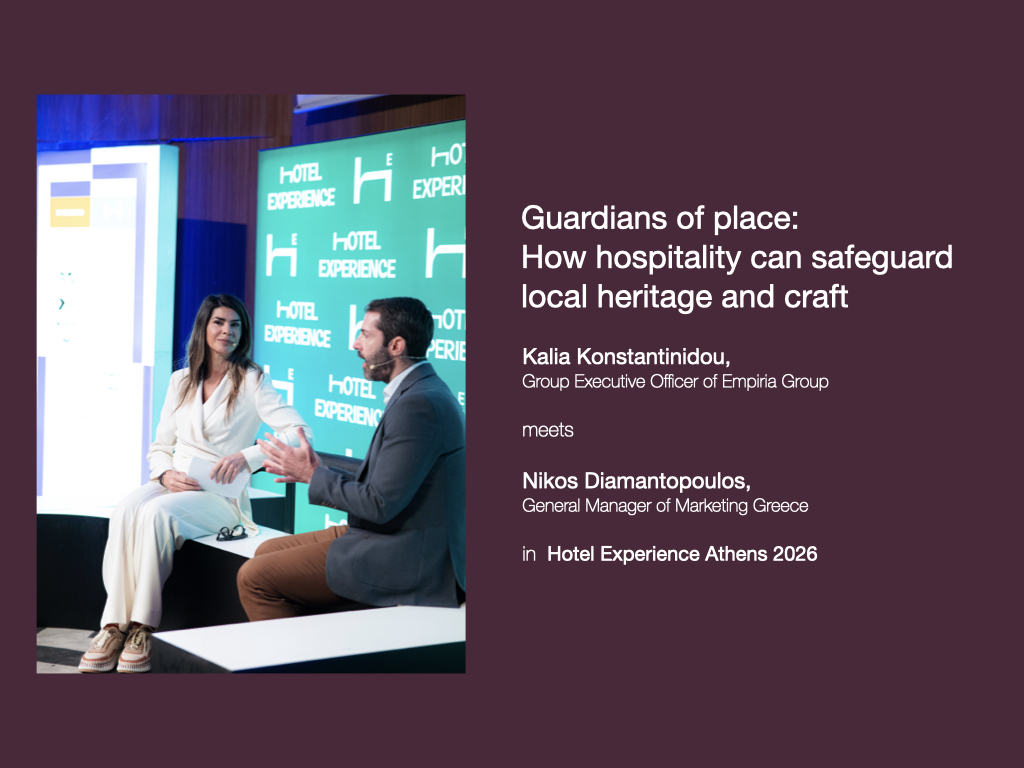
At Hotel Experience Athens 2026, Kalia Konstantinidou, Group Executive Officer of Empiria Group, joined Nikos Diamantopoulos, General Manager of Marketing Greece, for a fireside chat exploring the role of hospitality in safeguarding cultural heritage, empowering local communities and shaping a more responsible future for Greek tourism.
The identity of a destination extends far beyond its landscape and architecture. It is shaped by its people, traditions, craftsmanship and the cultural practices that define everyday life.
This perspective was at the heart of “Guardians of Place: How Hospitality Can Safeguard Local Heritage and Craft”, a fireside chat between Kalia Konstantinidou, Group Executive Officer of Empiria Group, and Nikos Diamantopoulos, General Manager of Marketing Greece, at Hotel Experience Athens 2026.
The discussion explored the relationship between cultural heritage, destination marketing and the hospitality industry's responsibility to preserve the distinctive character of destinations while creating lasting value for local communities.
Culture as the Living Identity of a Destination
Intangible cultural heritage is an essential part of what makes a destination unique. From traditional craftsmanship and gastronomy to local customs and everyday practices, these elements define the cultural character of a place beyond its physical beauty.
In the Cyclades, where Empiria Group has established a strong presence, local traditions and the people who sustain them contribute to the individuality of each island. As travellers increasingly seek deeper connections with the places they visit, cultural authenticity has become an important dimension of contemporary luxury hospitality.
For Empiria Group, hospitality extends beyond accommodation, creating opportunities for visitors to discover local culture and engage with the communities behind it. Preserving authenticity remains central to this approach, ensuring that cultural heritage continues to be a living expression of local identity rather than a staged experience designed for tourism.
From Cultural Appreciation to Shared Responsibility
As hospitality businesses benefit from the distinctive identity of their destinations, protecting that identity becomes an integral responsibility.
A destination is a living ecosystem of people, traditions, natural resources and economic relationships. Its long-term vitality depends on balancing tourism development with the needs of local communities.
This responsibility must translate into tangible action. Collaborations with local producers, artisans, artists and cultural organisations can help preserve traditional knowledge, support local economies and create opportunities for future generations.
Such an approach also encourages a broader definition of tourism success, extending beyond visitor arrivals and financial performance to consider the long-term value generated for destinations and their residents.
Cultural preservation and tourism development are not competing objectives. Safeguarding local identity is fundamental to the sustainability and future competitiveness of a destination.

The Power of Collaboration
Preserving cultural identity requires collective effort, bringing together hospitality businesses, local authorities, cultural institutions, producers, artisans and residents around a shared vision.
For Empiria Group, this philosophy is reflected in PHOS, a platform of experiential encounters designed to connect travellers with the authentic cultural identity of the destinations they visit. Through art, gastronomy, craftsmanship and cultural expression, PHOS creates opportunities for meaningful engagement between visitors and local communities.
Initiatives such as the Anogeia Weaving House in Crete and Cycladic Identity, developed by the Museum of Cycladic Art, further demonstrate how collaboration can contribute to safeguarding traditional knowledge, supporting local creativity and ensuring cultural continuity.
Together, these examples highlight the potential of hospitality to act as a catalyst for partnerships that strengthen local communities while preserving the traditions that make each destination distinctive.
Rethinking the Story Greece Tells the World
Greece's international identity has long been associated with its natural beauty, islands and summer experiences. Yet the country's cultural richness offers an opportunity to develop a more comprehensive narrative, one that places its people, traditions and local creativity at the forefront.
Achieving this requires moving beyond standardised representations of authenticity and encouraging local communities to participate actively in shaping how their destinations are presented internationally.
Hospitality can play an important role in connecting destination promotion with cultural preservation, transforming travellers' interest into opportunities that support local creators, traditional practices and community development.
For Empiria Group, this reflects a broader vision of contemporary hospitality, one that connects travellers with the cultural richness of Greece while contributing to the long-term wellbeing of its destinations.
Ultimately, the future of Greek tourism depends not only on how successfully the country communicates its appeal, but also on its ability to protect the people, traditions and cultural heritage that make it unique.